Our solutions

Epix is built from modules — the Order and Information System (OIS), the Warehouse Management System (WMS), production and 3PL — and does not have to be introduced in full. Run together, they close the information gap that otherwise leads to errors and delays: OIS is responsible for what and who — agreements, orders and finance — while WMS is responsible for how and where: movements, use of space and precision of execution. Run on its own behind the business system you already have, the WMS is the same code base, the same location engine and the same handheld app as in a complete installation. Epix rests on several decades of practical experience in warehousing, logistics and business operations in the Nordic market, and provides one shared source of information for the entire product lifecycle — from purchase order to delivery confirmation.
Four ways to use Epix
Epix does not have to be introduced in full. The same code base, the same location engine and the same handheld app are used whether Epix is the entire business system or a warehouse and production engine behind the systems you already have.
-
Complete business system
OIS WMS Production 3PL
Orders, agreements, purchasing, warehousing, production and 3PL billing in one installation — no interfaces to maintain between them.
Several warehouses and several legal entities in the same installation, with cross-docking and relocation between the warehouses.
Customer orders from a web shop or EDI become order lines directly, are picked in the warehouse and are followed by the customer.
Suits wholesalers and distributors who want one system, one supplier and one interface.
-
Epix and your finance system
OIS + WMS your existing system: Finance system
Epix handles orders, warehousing and production; vouchers and invoices are passed on to your existing finance system.
Ready-made connectors for Fortnox and 24SevenOffice — customer orders, items, supplier invoices and customer invoices are synchronised as jobs.
The chart of accounts and posting types are distributed to Epix, so that every business transaction is posted correctly at the source.
Suits companies that already have their accounting where it belongs and want to replace the goods flow.
-
WMS only, alongside your existing ERP
your existing system: Existing ERP Epix WMS
Orders, items and inbound shipping notices arrive over documented and versioned XML EDI or GS1 EDIFACT — ORDERS, DESADV, INVRPT.
Order status, picked, packed, shipped and stock balances are sent back in real time. Faulty messages land in an error queue and can be resent from the interface.
The whole WMS is included: location service, automatic task assignment, handheld app, AutoStore, labels through Unifaun and nShift, and 3PL billing.
Suits those who keep their ERP but have outgrown its warehouse module — or are starting a 3PL operation.
-
WMS with production, alongside your existing ERP
your existing system: ERP WMS + Production
Production orders are sent in from the ERP — or created in Epix from customer orders — and planned against work stations in Epix.
Component consumption, produced and scrapped quantities and time are reported on the handheld and reported back to the ERP. Recipes and batches run on the same pallet and location engine.
If the ERP already has production of its own, it stays. Epix is then integrated as the WMS for both raw material and finished goods: WMS feeds the production area with raw materials and receives, stores and picks the finished goods.
Suits trading companies with light manufacturing, or food and batch production in the warehouse.
Solid box = Epix. Dashed box = your existing system.
Where Epix runs
Epix runs where the business needs it to run. The same system and the same functions whichever form you choose — what differs is who handles operations and where the data sits.
-
Cloud service (SaaS)
We run the system and the customer uses it. Operations, updates, backups and monitoring sit with us.
Suits those who want to get going without building an operations organisation of their own, and who would rather spend their time on the business than on servers.
-
Own servers (on-premise)
The system runs in the customer's own environment. This is the route for operations with strict availability requirements, and for those who need to keep their data with them for reasons of integrity or security.
Operations are handled in-house, or together with the service provider you already use — in which case we come in as consultants for installation, upgrades and troubleshooting.
-
Cloud infrastructure
The same installation as on-premise, but on infrastructure at Microsoft Azure or Amazon Web Services.
Gives redundancy and capacity that can be changed over time, without a server room of your own, and with control of the environment kept by the customer.

Maximised utilisation and shorter lead times (WMS)
The warehouse management system is where commercial intent becomes physical execution. Epix treats the warehouse as a measurable space and the operator as a valuable resource, engineering the waste out of every movement.
Technical core:
- Multi-dimensional storage control: Every location is defined by its exact dimensions. The system ensures the pallet fits the width, height and depth of the location, and that its maximum weight capacity is never exceeded.
- True path calculation: Rather than simple coordinates, the system uses aisle-based routing logic that accounts for the actual layout of the facility when sequencing movements.
- Velocity zones and consolidation: ABC analysis places fast-moving items close to the picking route, and fragmented stock is identified with consolidation proposals so that floor space is used better.
- Hazardous goods handling: Risk classification ensures that chemically or physically incompatible products are never stored in the same zone.
- Pre-emptive replenishment: Empty pick faces are avoided through automatic replenishment tasks that move goods from bulk storage to the pick location in time.
Outcome: More storage capacity without building, shorter picking times and fewer mis-picks.



Inventory precision and stock integrity
An accurate stock figure is the difference between a satisfied customer and a costly error. Epix goes beyond counting SKUs and makes sure the digital picture of the warehouse reflects physical reality.
Technical core:
- Unique pallet identity: Every transport unit is handled as its own object with its own history, status and movement log — from arrival at the facility to final delivery.
- Batch and serial number tracking: For products that require full traceability, each unit can be traced backwards to its origin and forwards to its destination.
- Available versus reserved: Several stock states are kept apart — physical stock, reserved stock, and goods in receiving or return — so that overselling is prevented and stock on hand is not contaminated by unverified goods.
- OIS to WMS reconciliation: Built-in tools detect and resolve discrepancies between the commercial ledger and the physical record.
- Integrated quality gates: Incoming goods are held in quality control status until approved, which prevents defective products from ever reaching a pick face.
- Shortage handling: When a shortage is reported the system automatically looks for alternative stock in other locations that can be re-allocated to complete the order.
Outcome: Stock figures you can act on, traceability down to the individual unit, and fewer delivery discrepancies to investigate after the fact.
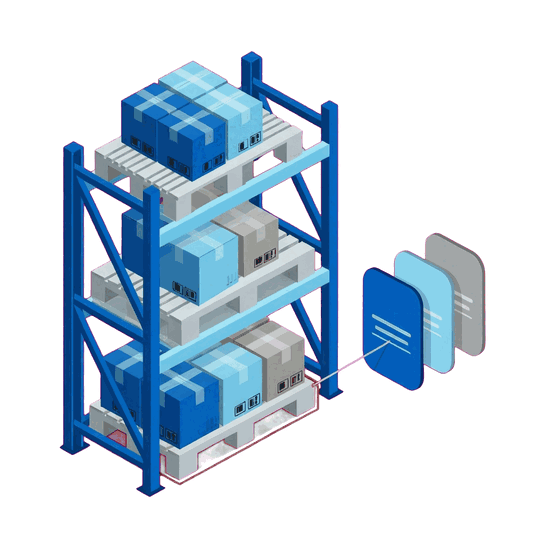
Operational efficiency and task management
In a warehouse, distance is cost. Every additional metre travelled by a colleague or a vehicle is efficiency lost. Epix replaces static pick lists with a dynamic task engine that specifies not only what is to be done, but where and in which order.
Technical core:
- Pick batching: Order lines are merged into optimised picking runs, minimising the total travel distance required to complete a set of orders.
- Load balancing: Batches are sized to use the full capacity of the picking vehicle without overloading the operator.
- Unified task queue: Picking, relocation and put-away are handled in one priority-driven queue rather than in separate lists.
- Cart coordination: The system tracks the position and status of picking carts in real time, so tasks are assigned to the nearest available resource.
- Algorithmic distance calculation: A dedicated distance service computes the most efficient route between two points using the real topology of the warehouse, and refines task sequencing continuously from actual movement data.
Outcome: Higher throughput without pushing the pace of work, and a lighter load on operators.

Inbound and outbound without gaps
The points where goods enter and leave the facility are the most critical moments in the flow. Epix secures both ends with clear process control and automated synchronisation against OIS.
Technical core:
- Planned receiving: Synchronisation with purchase orders in OIS prepares the warehouse for incoming volume, so dock allocation and staffing can be planned in advance.
- Built-in quality control: Quality control is not a separate step but a gate in the receiving flow — only approved goods reach available stock.
- Considered put-away: The operator is guided to the most efficient location based on volume optimisation and any hazardous goods restrictions, shortening the time from dock to shelf.
- Priority-driven despatch: From released order in OIS to pick task in WMS the flow is continuous, and the most urgent shipments are handled first.
- Consolidation and packing: Order lines are grouped into the most sensible parcels and shipments, which lowers freight cost and makes receiving simpler for the customer.
- Carrier integration: Transport bookings and forwarding services are handled in the system, so the physical shipment is timed against the carrier schedule.
Outcome: Delivery notes and freight documents that match the physical shipment exactly, and an indisputable record of which pallet went in which parcel on which vehicle.
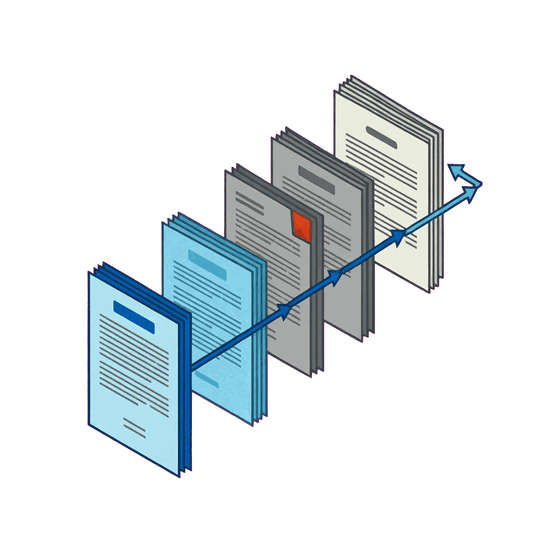
Commercial and administrative core (OIS)
The Order and Information System is the administrative hub of the business. By closing the gap between quotation, order and invoice, every transaction becomes accurate, documented and financially sound.
Technical core:
- Quotation to confirmed order: The terms agreed during the sales phase carry through the entire process, with no manual re-entry at any step.
- Agreements and differentiated pricing: Beyond standard price lists, the system handles customer-specific agreements, tiered pricing and time-bound campaigns, fully integrated with the order flow.
- Fiscal year management: Tools for creating and managing accounting years, including migration of chart-of-accounts data between periods.
- VAT and Intrastat: Built-in support for VAT handling and Intrastat reporting, so that cross-border trade is handled in line with applicable regulation.
- Stock-aware order control: Order entry is linked to genuinely available stock, which is what makes promised delivery dates achievable.
- GS1 and EDIFACT: Support for international standards lets orders, invoices and despatch advices be exchanged with partners without manual intervention.
Outcome: No information lost between the sales phase and invoicing, fewer billing discrepancies, and control of margin across the whole order value chain.


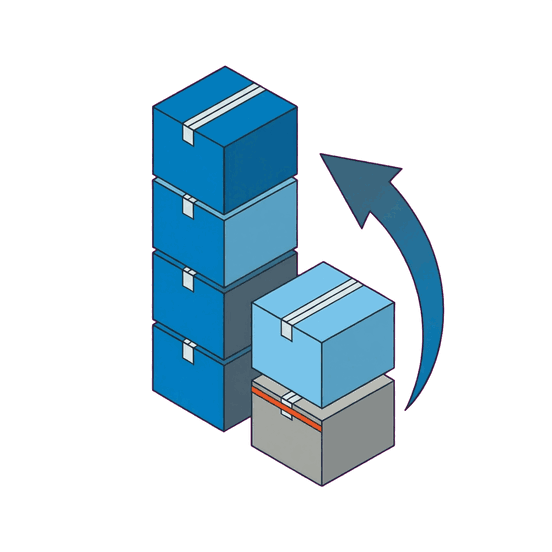
Strategic purchasing and procurement
Epix turns purchasing into an instrument of control rather than a data entry task. Buying happens on the agreed terms, and quantities are calculated rather than estimated.
Technical core:
- Supplier management: Complete administration of suppliers and purchasing agreements, with contact history and follow-up at supplier level.
- Mathematical stock optimisation: Support for established inventory control models, including the Wilson formula (EOQ), to calculate optimal order quantity and reorder point. This keeps total carrying cost down while reducing the risk of stockouts.
- Requirements against real stock: Purchasing requirements are calculated from current stock, reservations and production planning rather than from standard assumptions.
- Delivery follow-up: Continuous follow-up of purchase orders gives predictable inflow and makes supplier delivery performance measurable.
- Status tracking: Every order follows a clearly defined progression from request to confirmation and closing, so that delayed and back-ordered lines stay visible.
Outcome: Less capital tied up while delivery capability is maintained, and a factual basis for renegotiating with suppliers.
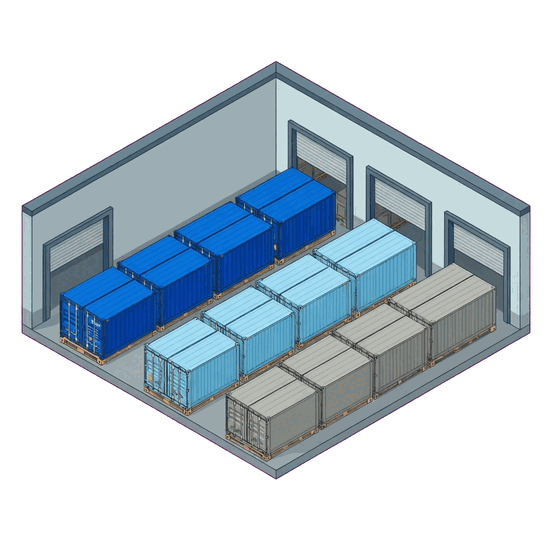
Supply chain and third-party logistics (3PL)
Epix is built for the 3PL model, where a single facility handles goods for several stock owners. The system connects physical handling to the agreement it is performed under, which turns logistics into a transparent and manageable part of the business rather than a pure cost.
Technical core:
- Separation by stock owner: All stock, orders and tasks are partitioned by stock owner, so data and physical goods are never mixed — even when the goods share a physical zone.
- Logistics agreements: Terms for handling, storage and freight are formalised per partner, with composite fee structures and tiered pricing based on volume, storage duration or product type.
- Activity-based event recording: Every logistics event — from a pallet movement to a pick operation — is recorded and tied to a specific stock owner and agreement.
- Automated invoicing: Invoices are generated from the activities, storage duration and space utilisation actually recorded rather than from flat fees, giving billing that can be traced line by line.
- Profitability analysis: With operational effort linked to financial outcome, it becomes visible which products and customers are genuinely expensive to handle, so that agreements can be adjusted accordingly.
Outcome: Invoicing without manual reconciliation, billing records that hold up under audit, and room to grow the number of stock owners without growing administration at the same rate.


Efficient goods flow through the network
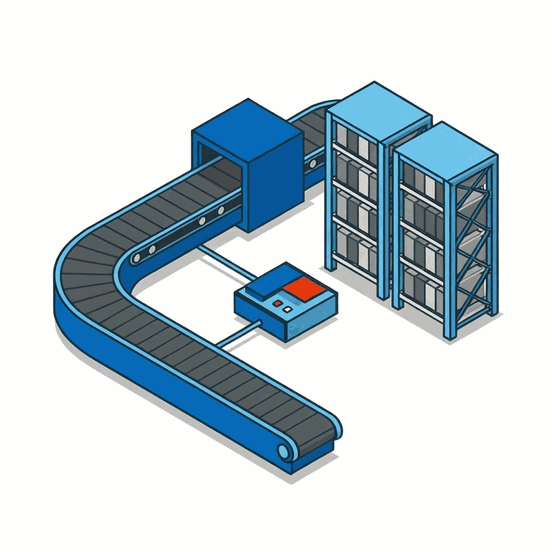
Beyond storage, Epix optimises the path goods take through the network. The shortest route between supplier and end customer is often the one that never passes a storage location at all.
Technical core:
- Cross-docking: Support for both warehouse and supplier cross-docking. Goods move straight from receiving to despatch without being put away, which sharply reduces handling time.
- Direct-to-customer delivery: Supplier cross-docking coordinates delivery straight from supplier to end customer, without the goods passing through the physical warehouse.
- Inter-warehouse transfers: Stock can be moved between facilities to level load and to sit closer to the end customer.
- Dynamic order split: If a picker meets a shortage, the order line can be split so that delivery continues with available stock instead of stalling.
Outcome: Fewer handling steps per order, lower storage cost and less time from supplier to end customer.

Integrated production and material flow (MPS)
For companies that both manufacture and distribute, the handover between the production line and the warehouse is often a source of friction. Epix treats production not as a separate process but as a specialised flow within the same system.
Technical core:
- Gross and net requirements: The system calculates the quantity of raw material needed against what actually has to be ordered, based on current stock and the production plan.
- Kitting: Picking raw materials to production stations is handled as ordinary warehouse work, and the assembly area is treated as a temporary location in the flow.
- Lead time integration: Production planning is driven by actual lead time data from OIS, accounting for public holidays and operating conditions.
- Sequenced assembly: Recipes define not only what is required but when, by linking components to specific operations.
- Scrap and waste tracking: Units scrapped during manufacture are recorded, so material loss can be analysed instead of disappearing into discrepancies.
- Automatic transition to finished goods: The moment a product is complete it becomes a WMS pallet, is assigned a batch ID and enters the normal despatch flow.
Outcome: Shorter lead times from order to delivery, less material tied up in work in progress, and full traceability from raw material consumed to finished product delivered.



Recipe and bill of materials management
For recipe-based production, Epix provides strict control of components and steps, which gives consistent quality and predictable material consumption.
Technical core:
- Standardised recipes: Define exactly which components and which steps are required to manufacture a finished product.
- Multiple recipe versions: Several versions per product make it possible to improve the manufacturing method incrementally, without disturbing production orders already in progress.
- Unit conversion: Conversion between storage units such as pallets and cartons and production quantities in kilos, litres or pieces happens automatically, so recipes are executed correctly.
- Reporting from the floor: Consumption and produced quantity are reported through fixed or handheld terminals, in the same flow as other warehouse work.
Outcome: Consistent product quality, material consumption that can be budgeted, and traceability per production batch.

Customer care and sales support (CRM)
In professional B2B operations the relationship with the customer matters as much as what is delivered. Epix builds customer care directly into the order and information flow instead of into a separate system alongside it.
Technical core:
- Activity follow-up: Calls, emails and meetings are recorded on the customer record, so anyone on the team can pick up a conversation with the full background.
- Tasks and reminders: Follow-up is scheduled in the system, which is what keeps a customer enquiry from being left unanswered.
- Linked documents: Quotations, orders, delivery notes and invoices are attached to the customer record. Nobody has to search another system for an agreement or an invoice.
- Sales insight in context: With a real-time view of stock in WMS and order history in OIS, the salesperson can give accurate lead times during the call itself.
- Quotation and tender handling: The transition from opportunity to confirmed order runs in the same flow, with the agreed terms intact.
Outcome: A chronological and shared picture of every customer relationship, and delivery commitments that hold because they are based on actual stock.
Automation and the connected ecosystem
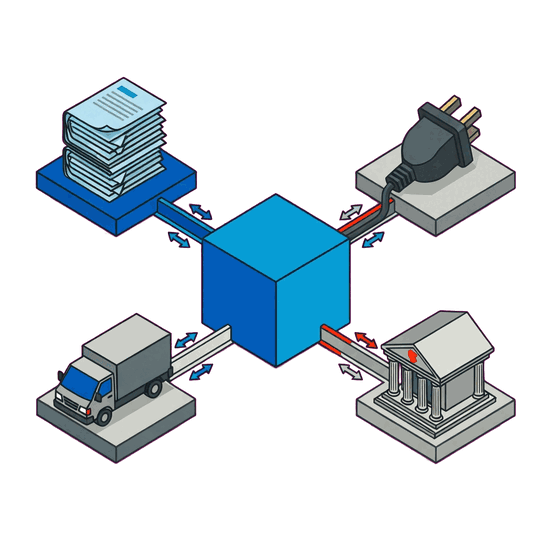
A warehouse does not exist in isolation. It is a node connected to suppliers, customers and the rest of the company's systems. Epix provides the digital infrastructure that makes that communication automated, secure and traceable.
Technical core:
- EDI to industry standard: Built-in support for EANCOM and ESAP with automatic exchange of the ORDERS, ORDRSP, DESADV and RECADV messages. A translation engine validates incoming data and maps it to internal OIS and WMS objects.
- Proactive notifications: Despatch advices and inventory reports keep partners current on shipment status and stock availability without anyone having to ask.
- Freight and carriers: Deep integration with nShift (Unifaun) and other carriers for automatic label production and shipment tracking.
- Automated storage (AS/RS): Direct control of automation equipment such as AutoStore, connecting the WMS logic to the robotised handling.
- Finance and business systems: Ready-made connections to finance systems such as Fortnox and business systems such as 24SevenOffice keep commercial and financial data in step.
- Open REST APIs: Where industry standards provide stability, the REST layer provides agility — custom portals, mobile apps and reporting tools can use warehouse data in real time.
Outcome: Orders that go from webshop or EDI straight into the pick queue, and minimal manual handling at the interface to partners.

Decision support and analysis
Data has value only once it leads to better decisions. Epix provides the transparency required for follow-up at both operational and management level.
Technical core:
- Operational reporting: A comprehensive report set gives visibility into everything from picking efficiency and stock turnover to supplier delivery performance.
- Digital twin in 3D: The full warehouse layout is rendered in 3D with real-time indicators for pallet locations, cart positions and bottlenecks. The view serves both daily oversight from a distance and planning of rebuilds with visual support.
- Space utilisation analysis: The spatial view makes it possible to see where capacity actually runs out, instead of calculating on averages.
- BI tool integration: The system is prepared for in-depth analysis in QlikView, and the operational data flow can equally be read by PowerBI or Tableau for dashboards and trend analysis.
Outcome: Decisions made on a factual basis, and deviations surfaced while they can still be acted on.
How an implementation works
Replacing a system is a business project, not an installation. We work in four stages — mapping, configuration, migration and go-live — with the operation running throughout.